• SONAR
  • WASAPI Question - Can I use this instead of ASIO with a usb interface?
2016/12/01 21:32:04
digimidi
 I have a Focusrite USB 16i6 interface.  Would I be gaining anything over ASIO?  I assume that it can run WASAPI...or is it only for internal sound chips like the RealTek audio chips?
 
Regards
2016/12/01 22:48:06
outland144k
digimidi
 I have a Focusrite USB 16i6 interface.  Would I be gaining anything over ASIO?  I assume that it can run WASAPI...or is it only for internal sound chips like the RealTek audio chips?
 
Regards


I have an RME Babyface (it's USB). I got it to run tonight with the WASAPI driver. I got good latency (though I think times may have been better than they registered), but ASIO was still faster all in all. I'll play with it some tomorrow. 
2016/12/01 23:44:49
Cactus Music
ASIO wins the loop back test every time. Below screenshot SPLAT W 10 all modes tested. Even Cakewalk is telling you not to use it if you have ASIO drivers,, it's for using with on board audio or devices that don't have ASIO drivers,, it is not a better driver  for real interfaces that have ASIO drivers. As my loopback test shows, your track will not be in sync unless you mess with the manual offset. 
 

2016/12/02 00:25:08
Noel Borthwick [Cakewalk]
Again WASAPI is not a driver in itself and technically neither is ASIO.
WASAPI is the modern Windows API to communicate with audio drivers. The diagram below shows how WASAPI communicates with the driver.


One of the main reasons we did the updates to WASAPI is because of the enhancements in Win10 as documented here:
"In Windows 10 we minimized the latency of the OS to a bare minimum. Without any driver changes, all applications in Windows 10 will have 4.5-16ms lower latency. "
https://blogs.msdn.microsoft.com/iliast/2016/01/28/whats-new-in-audio-for-windows-10/
 
 
Regarding syncing audio, WASAPI doesn't have any way to query the system for its input and output latency unlike ASIO. As such SONAR has no way to account for this other than the user manually entering an offset. For most practical use cases you don't need to bother with this.
 
2016/12/02 22:01:29
outland144k
Noel Borthwick [Cakewalk]
Again WASAPI is not a driver in itself and technically neither is ASIO.
WASAPI is the modern Windows API to communicate with audio drivers. The diagram below shows how WASAPI communicates with the driver.


One of the main reasons we did the updates to WASAPI is because of the enhancements in Win10 as documented here:
"In Windows 10 we minimized the latency of the OS to a bare minimum. Without any driver changes, all applications in Windows 10 will have 4.5-16ms lower latency. "
https://blogs.msdn.microsoft.com/iliast/2016/01/28/whats-new-in-audio-for-windows-10/
 
 
Regarding syncing audio, WASAPI doesn't have any way to query the system for its input and output latency unlike ASIO. As such SONAR has no way to account for this other than the user manually entering an offset. For most practical use cases you don't need to bother with this.


Hi Noel,
 
Thanks for the above; your note does really help. But if I may ask what very well may be a thoroughly bone-headed question:
 
I am enclosing my ASIO latency and WASAPI latency estimates from the Driver Settings window in Preferences. I understand that WASAPI does not have "any way to query the system for its...latency unlike ASIO", but this fact seems to beg the question (especially given the fact that the effort made to minimize the latency of the OS to a bare minimum): shouldn't WASAPI, then, have less latency than ASIO? Is the latency of 3.0 ms an estimate? Is the issue really (and that for which I'm not accounting) the total roundtrip of 6.5 ms in ASIO?
 
                       
                                                                                                                ASIO Latency


                                                                                                           WASAPI Latency

2016/12/02 22:42:18
Noel Borthwick [Cakewalk]
outland144k
 
Hi Noel,
 
Thanks for the above; your note does really help. But if I may ask what very well may be a thoroughly bone-headed question:
 
I am enclosing my ASIO latency and WASAPI latency estimates from the Driver Settings window in Preferences. I understand that WASAPI does not have "any way to query the system for its...latency unlike ASIO", but this fact seems to beg the question (especially given the fact that the effort made to minimize the latency of the OS to a bare minimum): shouldn't WASAPI, then, have less latency than ASIO? Is the latency of 3.0 ms an estimate? Is the issue really (and that for which I'm not accounting) the total roundtrip of 6.5 ms in ASIO?

 
3 msec is the buffer size that SONAR uses when streaming audio via WASAPI. It doesn't take into account any additional external latencies that are inherent in the driver/hardware itself because there is no way for us to query WASAPI for that data. WASAPI gives us a min/max buffer size and that is what the latency slider reports. A driver could hypothetically go lower than 3 msec but I haven't seen many.
As an extreme example, consider a bluetooth device. SONAR will stream to the device at 3 msec but the effective latency is likely much higher (maybe around 200 msec) because of the bluetooth stack. We have no means to report that higher value using WASAPI.
 
As far as WASAPI having less latency than ASIO, I think its very unlikely since ASIO is a very thin layer around the driver. WASAPI exclusive can potentially have the same latency as ASIO depending on the driver itself.
2016/12/02 23:18:25
outland144k
Noel Borthwick [Cakewalk]
outland144k
 
Hi Noel,
 
Thanks for the above; your note does really help. But if I may ask what very well may be a thoroughly bone-headed question:
 
I am enclosing my ASIO latency and WASAPI latency estimates from the Driver Settings window in Preferences. I understand that WASAPI does not have "any way to query the system for its...latency unlike ASIO", but this fact seems to beg the question (especially given the fact that the effort made to minimize the latency of the OS to a bare minimum): shouldn't WASAPI, then, have less latency than ASIO? Is the latency of 3.0 ms an estimate? Is the issue really (and that for which I'm not accounting) the total roundtrip of 6.5 ms in ASIO?

 
3 msec is the buffer size that SONAR uses when streaming audio via WASAPI. It doesn't take into account any additional external latencies that are inherent in the driver/hardware itself because there is no way for us to query WASAPI for that data. WASAPI gives us a min/max buffer size and that is what the latency slider reports. A driver could hypothetically go lower than 3 msec but I haven't seen many.
As an extreme example, consider a bluetooth device. SONAR will stream to the device at 3 msec but the effective latency is likely much higher (maybe around 200 msec) because of the bluetooth stack. We have no means to report that higher value using WASAPI.
 
As far as WASAPI having less latency than ASIO, I think its very unlikely since ASIO is a very thin layer around the driver. WASAPI exclusive can potentially have the same latency as ASIO depending on the driver itself.


Gotcha. Thanks so much; that answers my question beautifully. 
2016/12/03 01:05:09
Cactus Music
Noel Borthwick [Cakewalk]
 
Regarding syncing audio, WASAPI doesn't have any way to query the system for its input and output latency unlike ASIO. As such SONAR has no way to account for this other than the user manually entering an offset. For most practical use cases you don't need to bother with this.


First, thanks for your detailed explanation and excellent diagram. But above statement had me pondering..
 
So I guess this goes with Sonars trend to cater to none musicians, looping  and ITB producing. Put up your hand if you ever play a real instrument and wish to overdub audio tracks,,, no one??? I thought so..   
Anybody notice the categories of drum loops included with Sonar these days? 
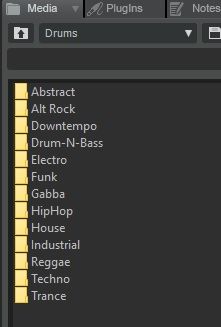


I guess nobody who uses Sonar would even dream of playing the Blues, Classic rock or country. That"s for geezers :) 
Sorry for being impractical and wanting a good solid multi track recorder that the sync heads don't need to be aligned before each session anymore... But all is good, I still have my ASIO and rock solid timing.  Thank you Focusrite and especially Tascam who's gear has been in my studio for about the same amount of time that Cakewalk has existed. 
2016/12/03 03:47:19
tenfoot
Cactus Music
Noel Borthwick [Cakewalk]
 
Regarding syncing audio, WASAPI doesn't have any way to query the system for its input and output latency unlike ASIO. As such SONAR has no way to account for this other than the user manually entering an offset. For most practical use cases you don't need to bother with this.


First, thanks for your detailed explanation and excellent diagram. But above statement had me pondering..
 
So I guess this goes with Sonars trend to cater to none musicians, looping  and ITB producing. Put up your hand if you ever play a real instrument and wish to overdub audio tracks,,, no one??? I thought so..   
Anybody notice the categories of drum loops included with Sonar these days? 


I guess nobody who uses Sonar would even dream of playing the Blues, Classic rock or country. That"s for geezers :) 
Sorry for being impractical and wanting a good solid multi track recorder that the sync heads don't need to be aligned before each session anymore... But all is good, I still have my ASIO and rock solid timing.  Thank you Focusrite and especially Tascam who's gear has been in my studio for about the same amount of time that Cakewalk has existed. 


I use asio in the studio because it is better there. I use wasapi for live performance because it is better there. I play many real instruments but love electronic ones too:) I don't think it's a zero sum game Johnny. We can have both!
2016/12/03 13:02:27
wst3
Since you were crazy enough to pop your head up Noel (and it is appreciated) - my only reason for using WASAPI or WDM is aggregating devices. It seems unlikely that his is a high priority for MS or Steinberg, is  there any chance Sonar could do something under the covers to allow disparate ASIO drivers to be visible, without messing too much with latency? It would be appreciated!
12
© 2026 APG vNext Commercial Version 5.1

Use My Existing Forum Account

Use My Social Media Account