Beagle
djwayne
Janet
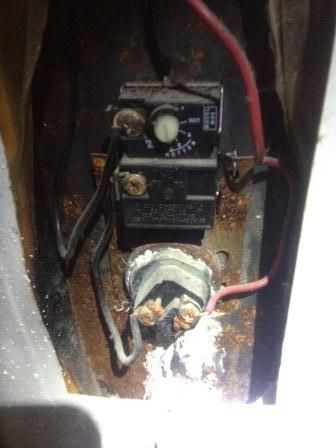
My son sent me this picture of the water heater the other day...he'd like to know if he needs to be concerned about the rust. I figured someone here could tell us. :)
It's looking pretty ragged, I'd say replace it beofore it starts leaking.
where did the rust come from if not from a leak?
The rust can come from age, heat, and moisture... likely a combination of all 3. If the rust is dry surface rust, it's probably OK. Surface rust on sheet metal is no big deal. There looks to be some surface rust on the tank but not much... most of it looks to be on the sheet metal for the thermostat.
The terminal screws appear to be rusted a bit and the wire looks to be secured improperly. The electrical connection should be clean and have no corrosion or rust on it. Corrosion and rust impede the flow of current and will cause heat that will burn the terminal screws off and damage the copper wire. Turn off the power and clean them up with a soft wire brush. Wrap the wire tightly and secure the screws firmly but not overly tight.
The most concerning thing to me is the white powdery stuff around the heating element. It looks like there is or has been a leak and the minerals have deposited there and below the element. If it is leaking and allowing minerals to deposit, that needs to be resolved.
If you go to the effort to remove the elements to clean up that corrosion, and the heater is in good condition other than that, I'd place new heating elements in it.
I'm not a plumber although I have worked on and replaced the elements in more than my share of water heaters.... a water heater is expected to live about 10 years...give or take. With proper maintenance , it can go much longer than that. Flush them out periodically, and the heating elements on the bottom will last longer. I've seen some that are 15 years old and inside the covers look as new as the day they were installed. It depends on the environment where they were installed. Most that are installed inside a house stay pristine. Garages, basements, utility rooms have higher temp variations and humidity and rust is common in those.