UPDATE: So these speakers are about a gnat's butt away from going in the trash! What a waste of $400, 3-1/2 years ago.
The other day, I opened up the speaker cases to investigate the new trouble. One speaker had intermittent woofer operation, and the other speaker had static/crackling in the mid-range driver. After some investigation, the IC amplifiers that power the units are
TDA2052 (mid-range driver), and the
TDA7296. Both are 60W amplifiers, and I have no idea why KRK decided to use both at the same time.
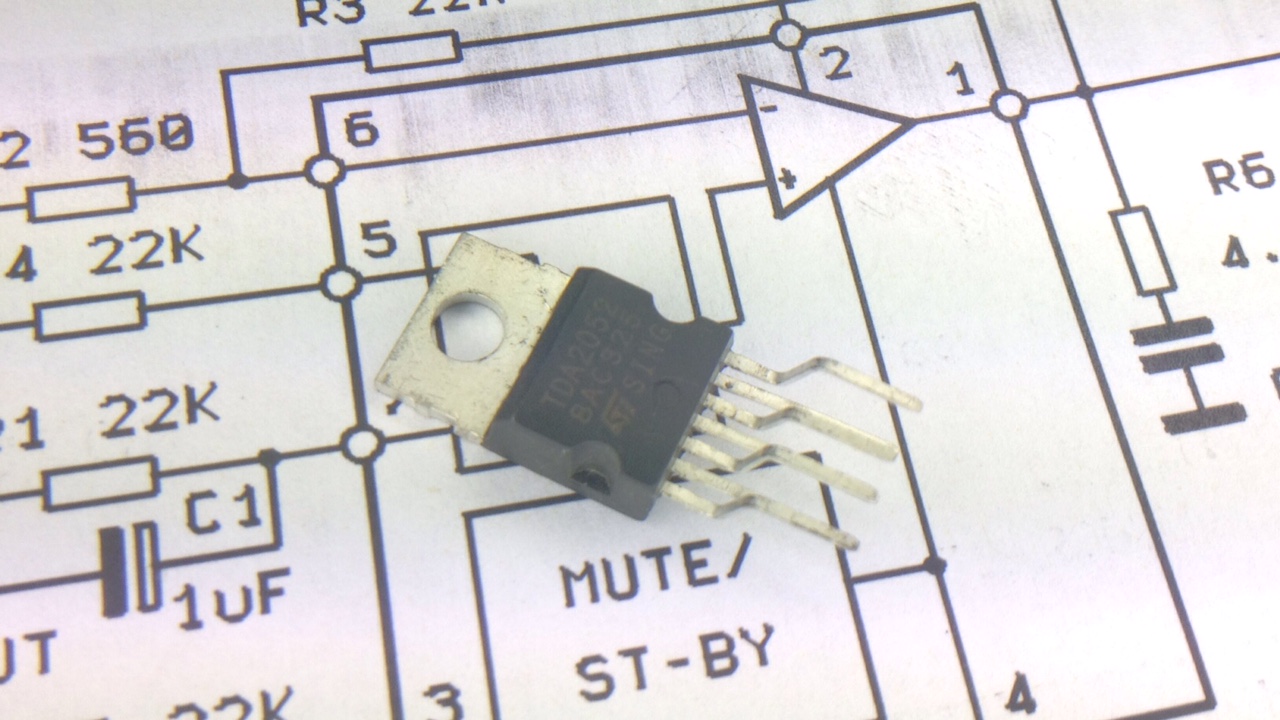
Upon inspection, the
TDA2052 was outputting about 200mV DC to the mid-range driver. Not good. It should be zero. When the DC was "on the line", the speaker crackled and popped. However, as the unit remained on after about 5 minutes, the crackles and pops subsided. It was noted at this point in time that the DC was near-zero. This screamed amplifier IC failure, so I immediately sought replacements.
After receiving the new components, I unsoldered the amplifier and replaced the old with the new. Upon power up, the speaker did not work as expected. The mid-range driver did not work. When powered up, I observed some very quiet sizzling on the board! WTH?!?!? This was nowhere near the amplifier IC's. It turns out that the black "goop" near the higher-voltage (+/-20Vdc) capacitors was sizzling! I could see tiny bubble emitting from goop! So what's this "goop" I speak of? Well, it's like a glue that the jerk manufacturers sloughed all over the board to hold components and wires in place. It turns out that this stuff was conductive. Not good at all.
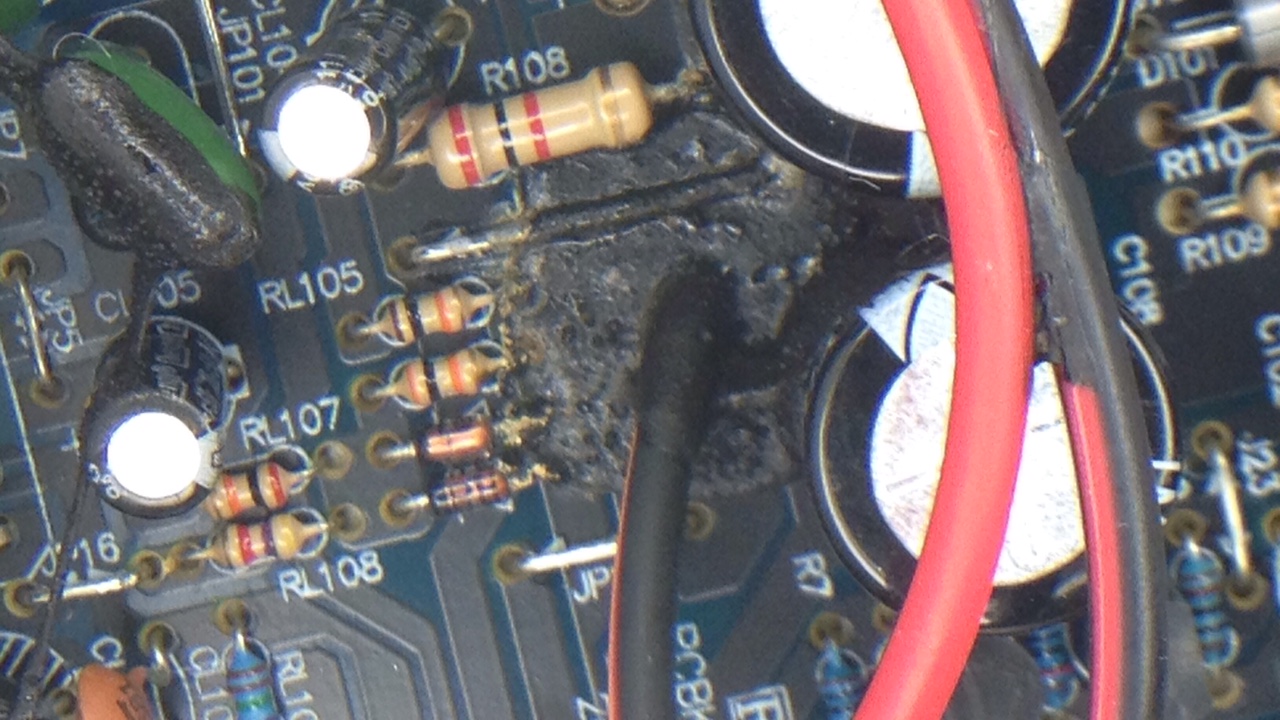
I managed to remove some of the goop and eliminated the sizzling.
However, at this point in time, the new
TDA2052 was outputting 11V to the mid-range driver. Again, not good. Near this amplifier was more goop, that spanned a jumper and a resistor. I cleaned up the goop as best as I could, and I noted the 11V dropped to about 10V. So I continued to clean up more goop, but the voltage did not reduce any further.
Thinking the replacement TDA2052 was shot, I swapped it out with another (as I bought two of each amplifier IC). Upon power up, the output to the mid-range driver was 0V. Yeah!
All good, until the replacement
TDA2052 let out it's magic smoke!
So there you go. The black goop coats the circuit board in many places, most likely conducting and corroding where it shouldn't. Overall, these speakers were doomed to fail since the date of manufacture.
I may try to clean up and put the other amplifier (i.e. the first swap-out) back in, but I'm not getting my hopes up.
I'll continue to update the thread as things progress further.