I took all the shots using my Canon EOS600D and 75-300mm zoom lens (full frame equivalent 120-480mm), some also had my 2.0X extender, effectively doubling the focal length. As my cheapo lens is notoriously poor at maximum focal length, I found I got better results using the extender and not fully zooming, so most images were captured around the 400mm to 500mm range (FF = 640-800mm). I also tried to shoot with the lens about half open (F11 - F22) as the inferior construction can lead to a lot of softening when it's wide open, and problems with diffraction when stopped right down.
As the first half of the eclipse was fairly overcast, I didn't need a neutral density filter, hence the cloud detail. From the maximum point onwards, the sky had cleared so I added an eight stop and a four stop neutral density filter to the lens; also using the extender here helped keep the exposures manageable as that effectively loses another two stops of light.
Anyway, here are a few of the better shots I managed to get:
1) 8.40am - First break in the clouds after first contact:
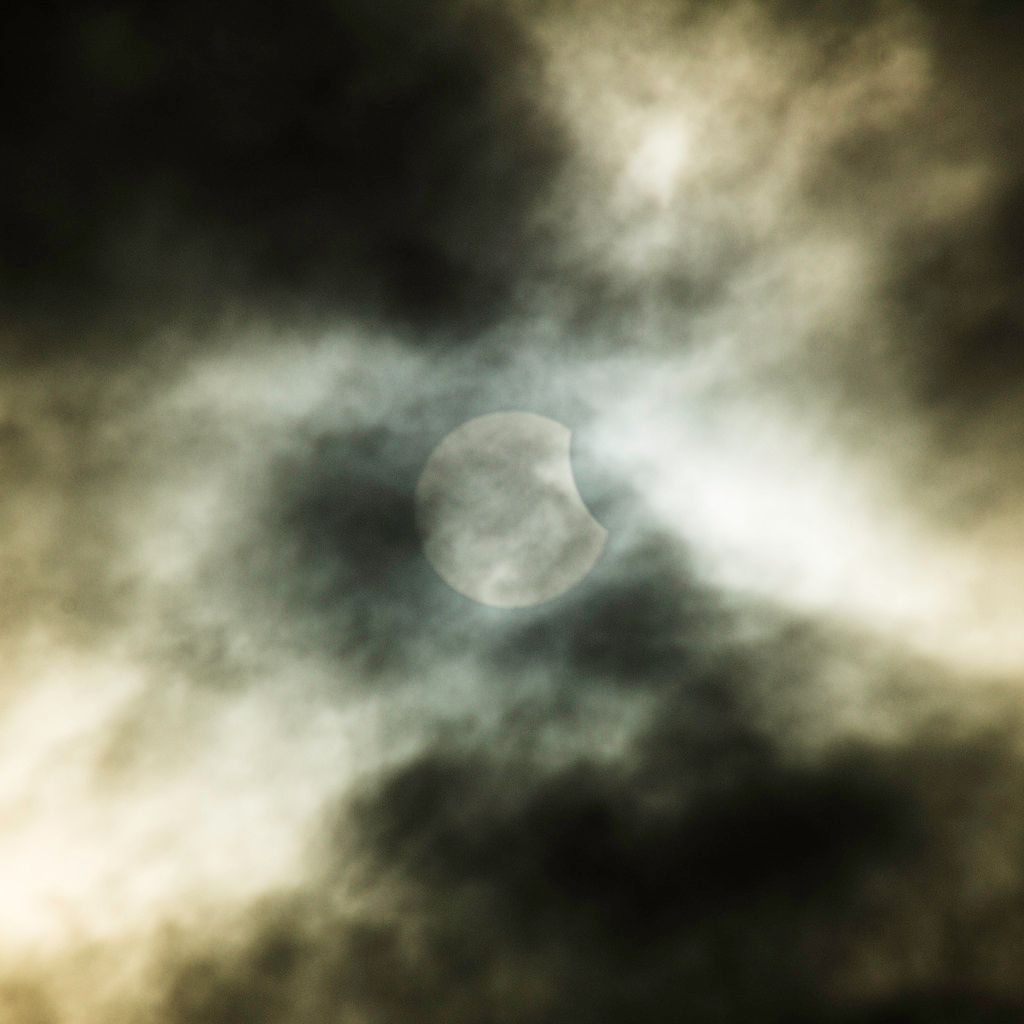
1/500sec, f16; ISO:100
2) 8.45am - Sunspot visible toward top left of disc:
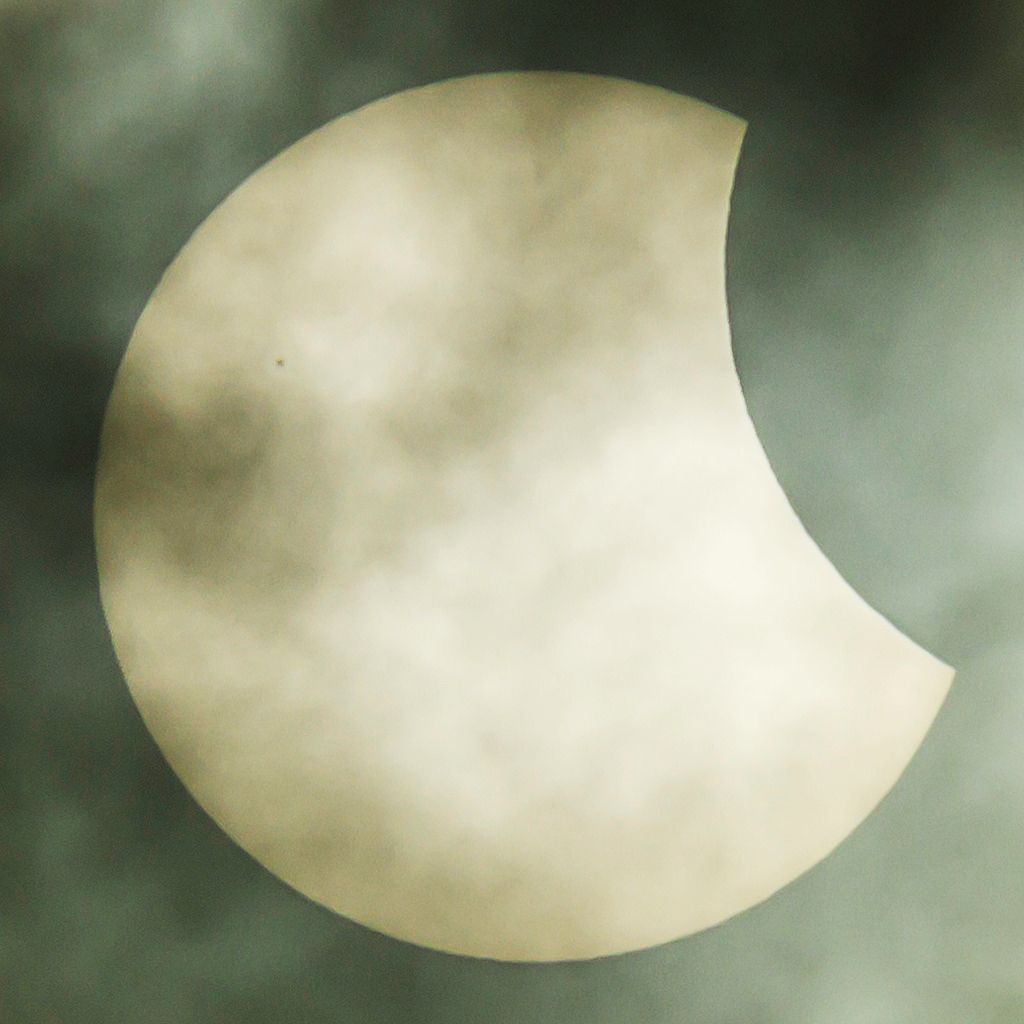
1/1000sec, f16; ISO:100
3) 9.15am - Sunspot just about to become occluded:
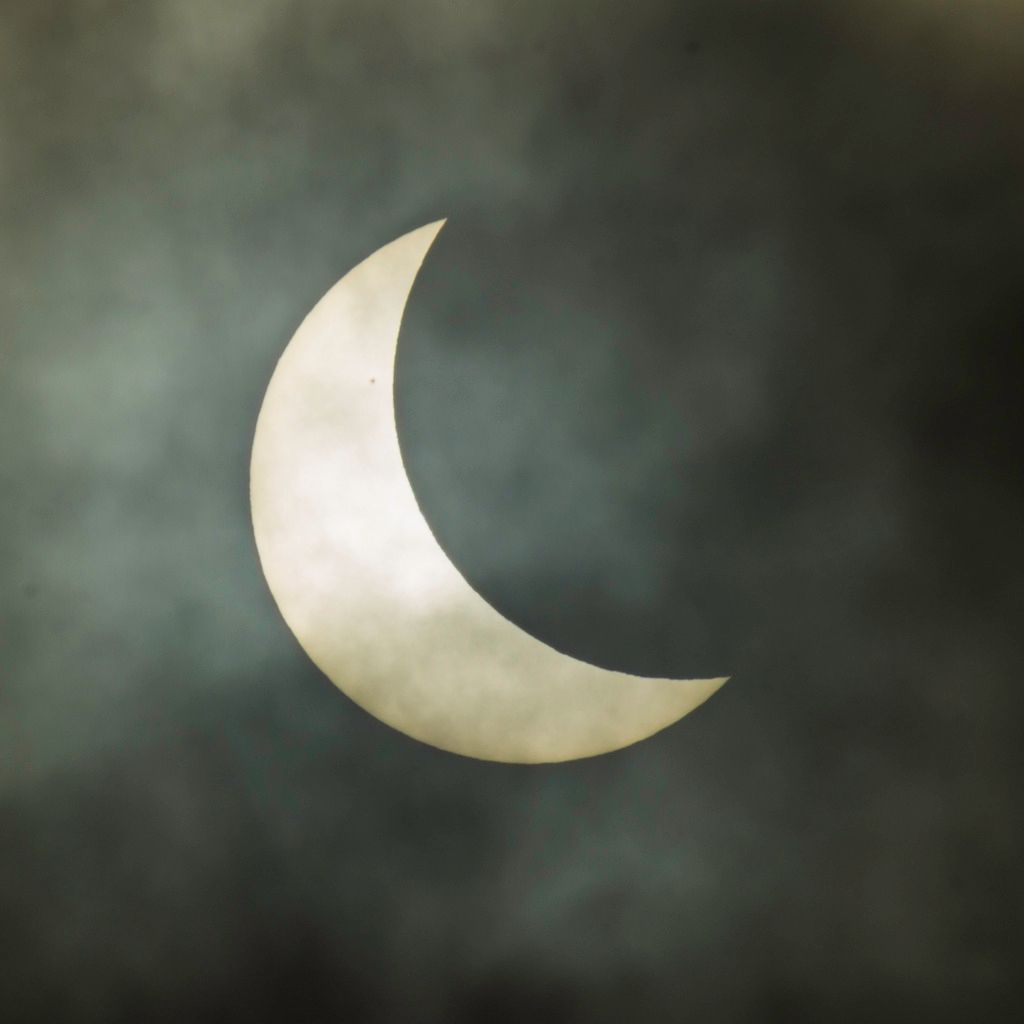
1/2000sec, f16; ISO:100
4) 9.22am:
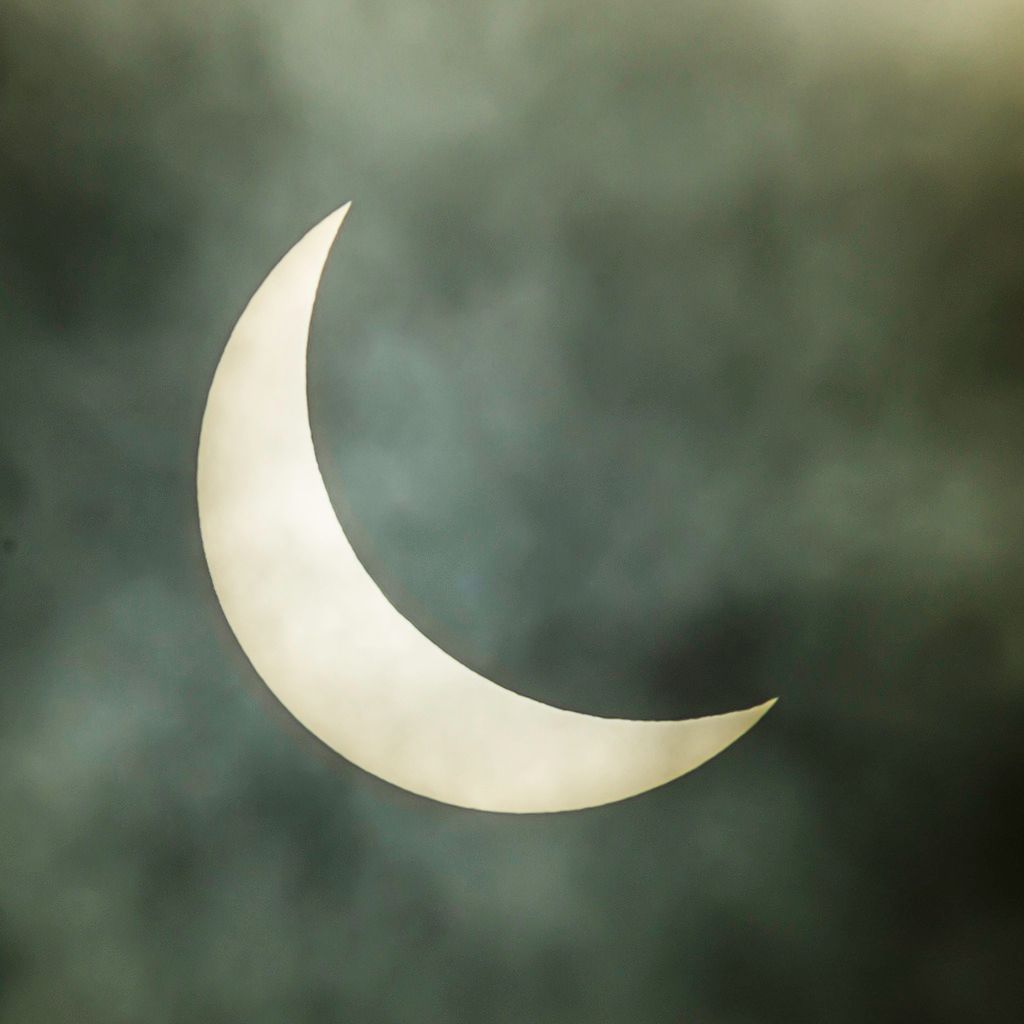
1/320sec, f20; ISO:100
5) 9.28am:
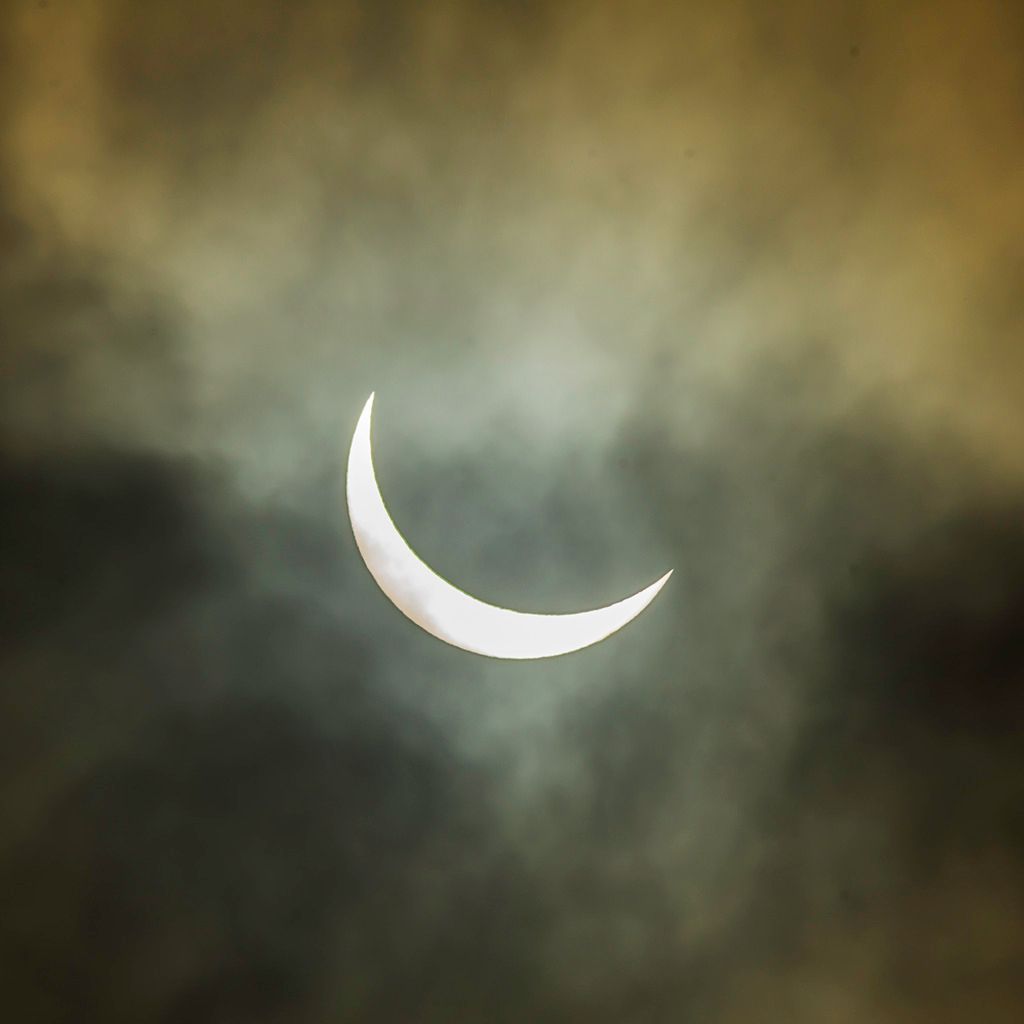
1/2000sec, f14; ISO:100
6) 9.32am:
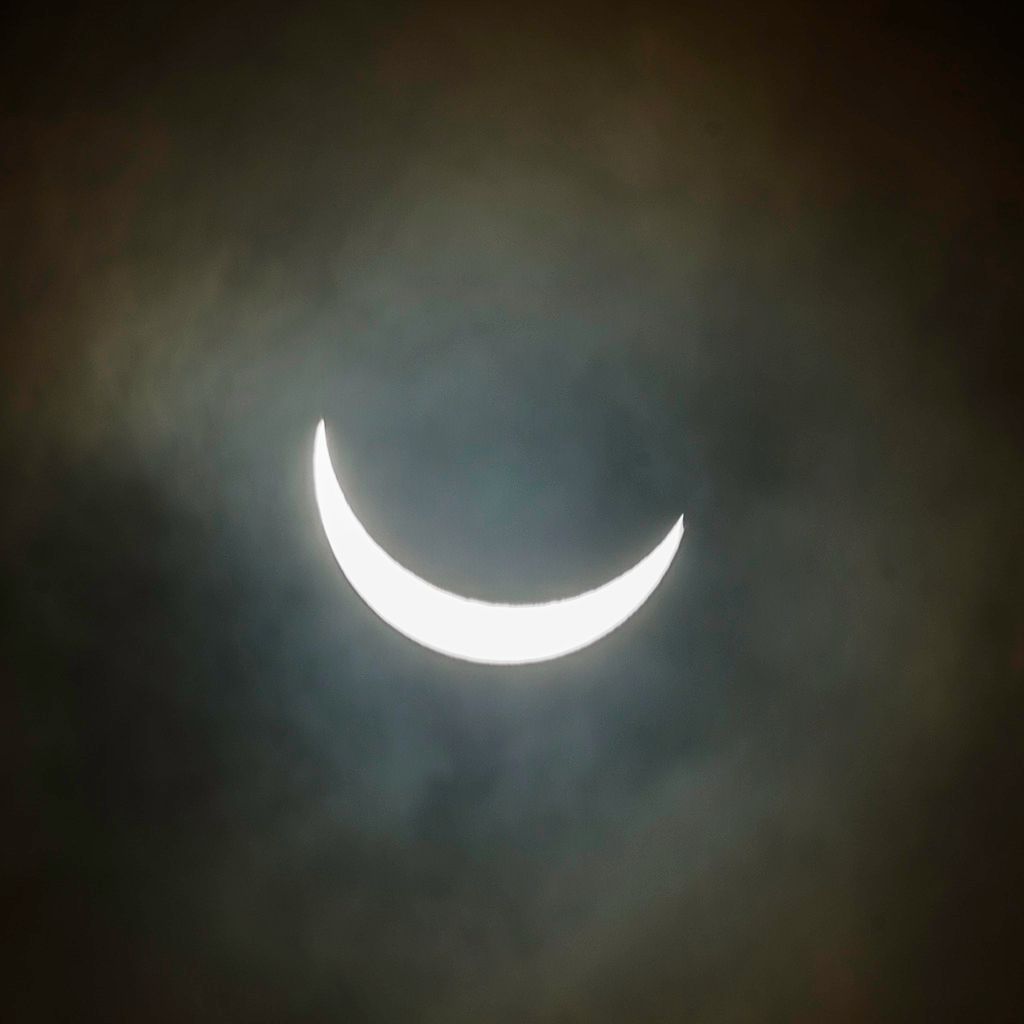
1/1250sec, f10; ISO:100
7) 9.35am - Eclipse maximum:
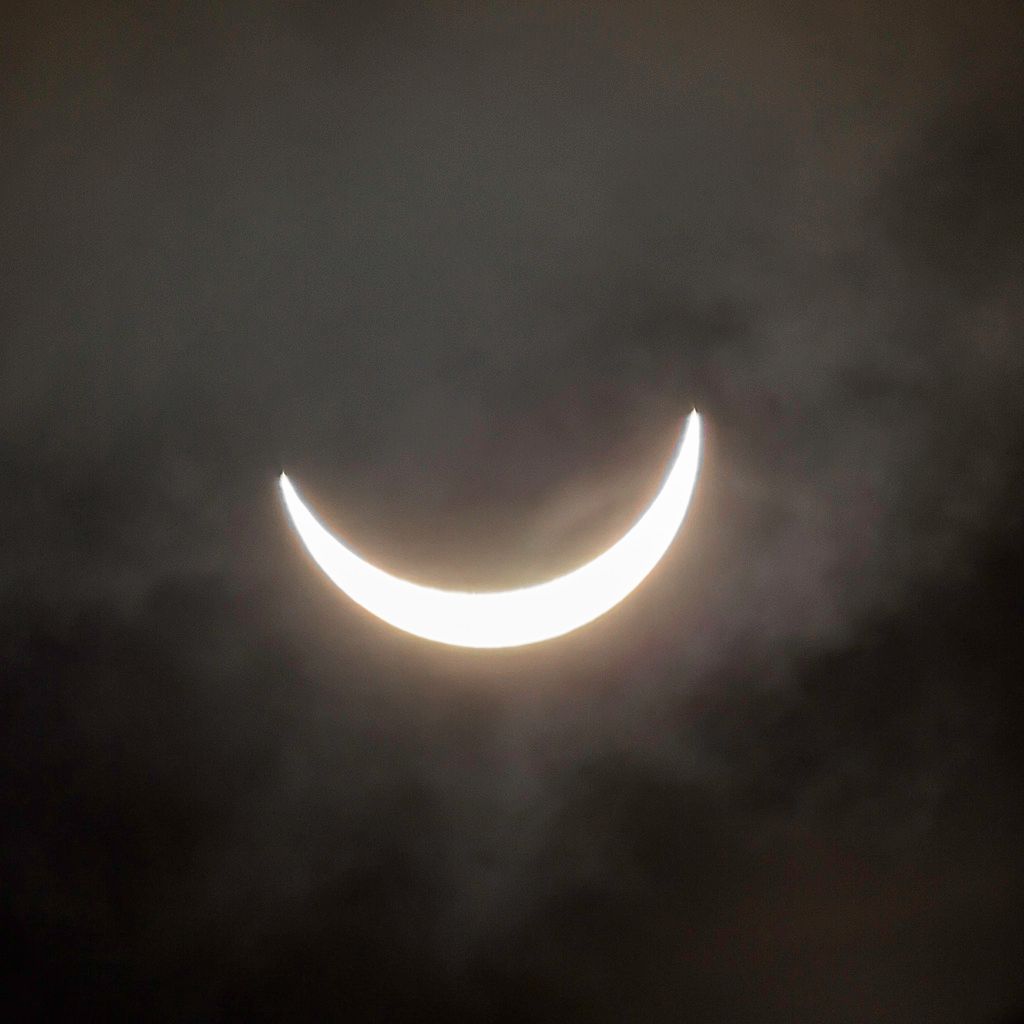
1/4000sec, f11; ISO:100
8) 9.57am:
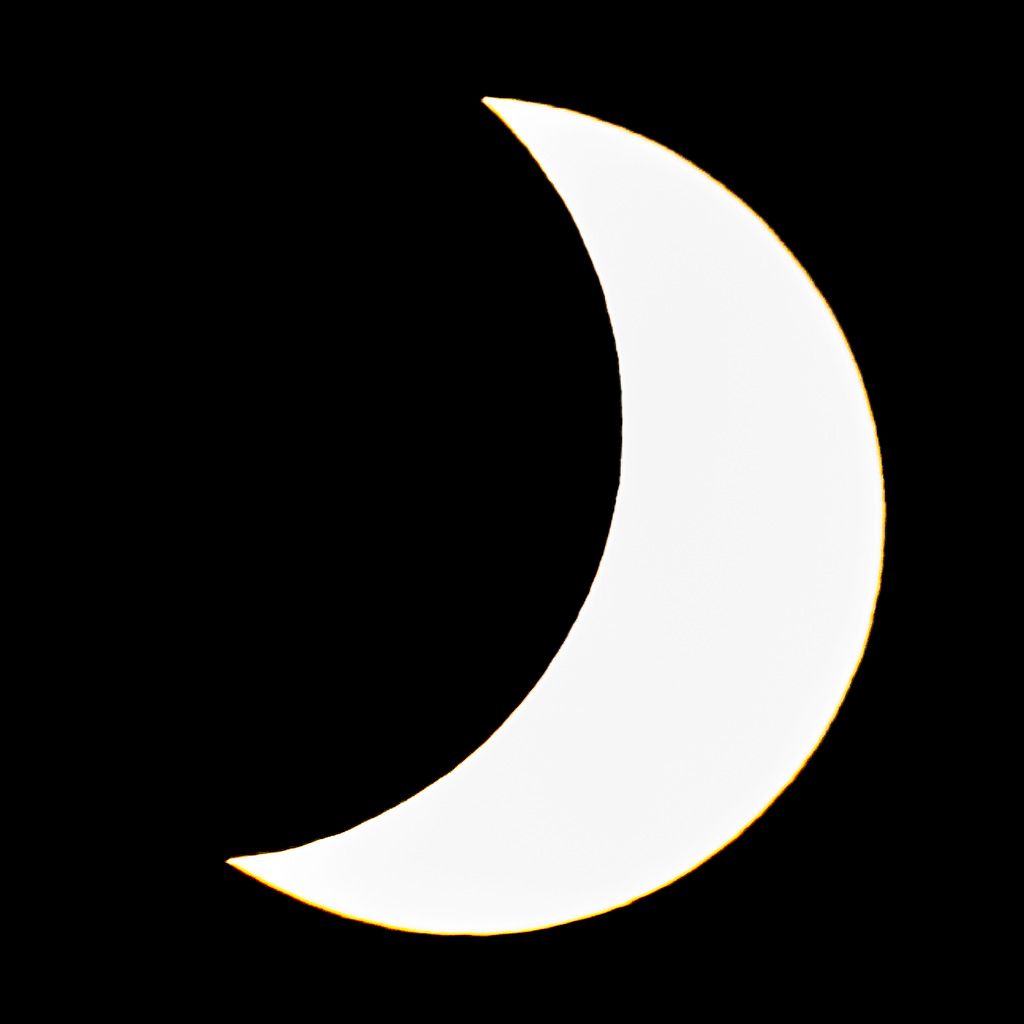
1/4000sec, f18 (+12stop ND); ISO:100
9) 10.08am:
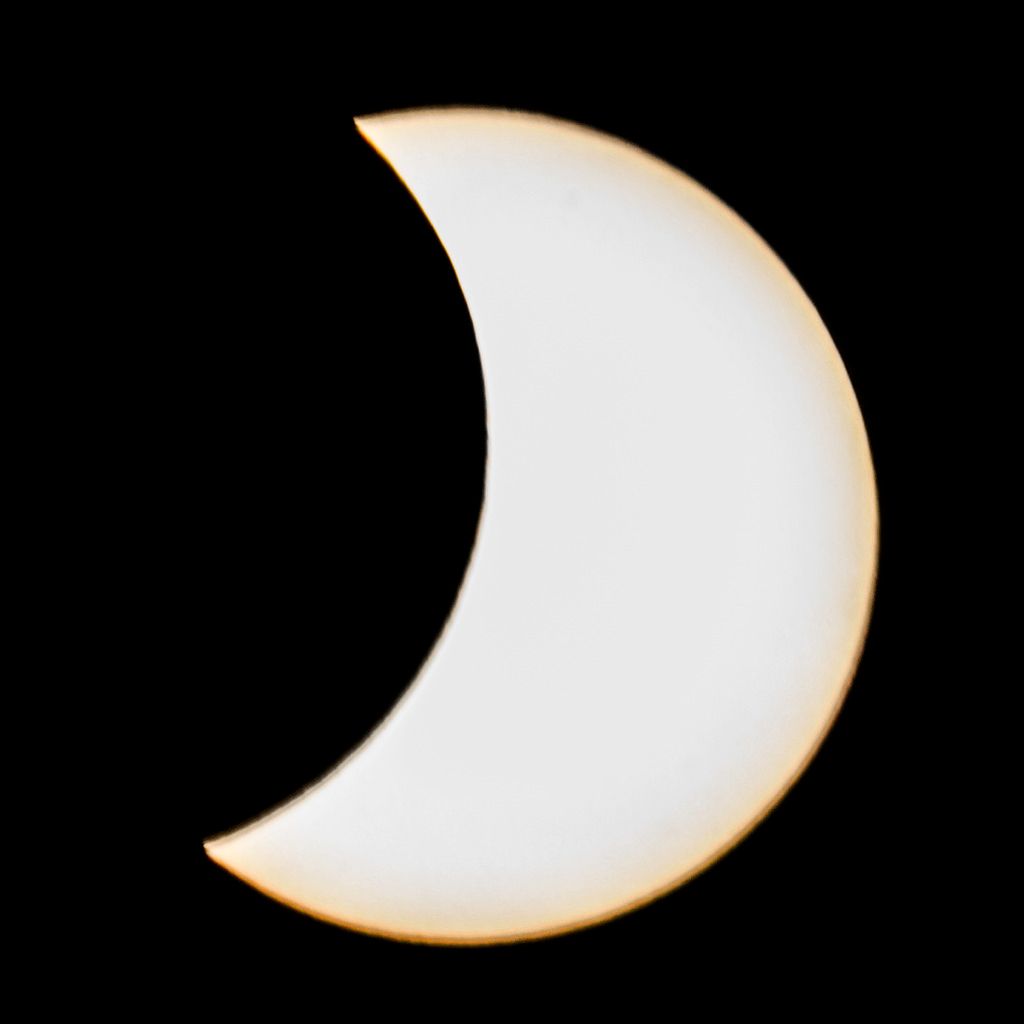
1/4000sec, f18 (+12stop ND); ISO:100
10) 10.29am - Sunspot has just reappeared:
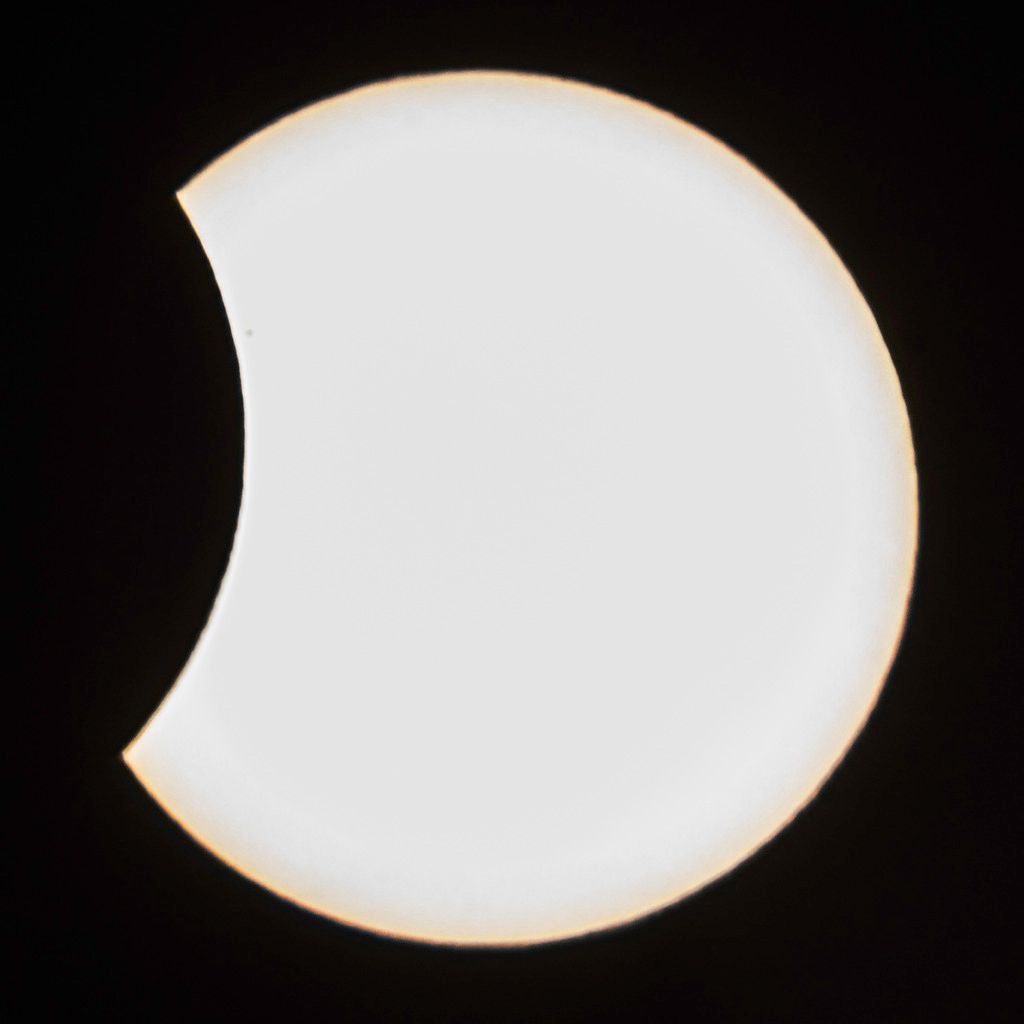
1/4000sec, f18 (+12stop ND); ISO:100
11) 10.43am - Just before last contact:
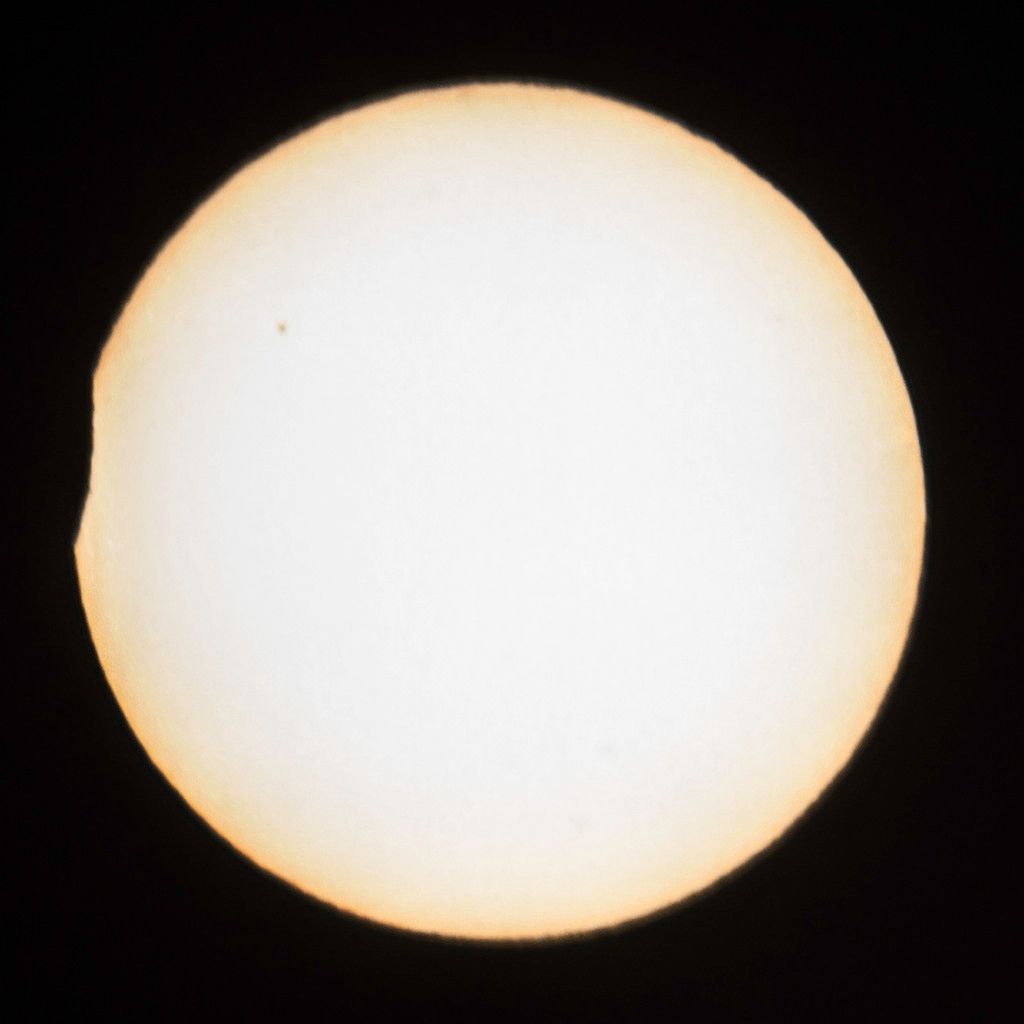
1/4000sec, f22 (+12stop ND); ISO:100
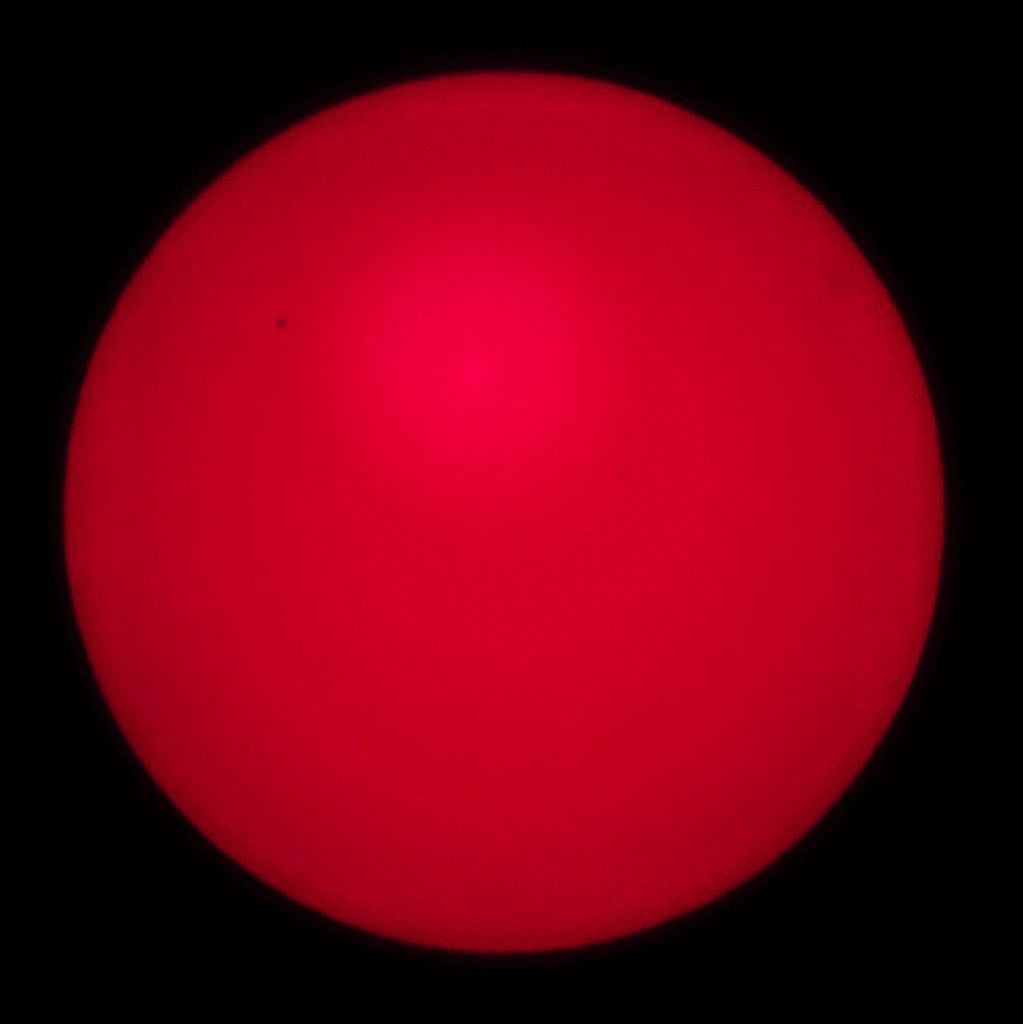
Here's a shot taken just after the eclipse with an infra red filter over the lens to show the sunspot a little clearer:
And finally, a roughly assembled and aligned time-lapse from all 99 images I captured: